Screening and chemical optimization
As part of an HHMI Collaborative Innovation Award headed by Peter Walter, we conducted a series of cell-based luciferase reporter gene screens to probe the Unfolded Protein Response (UPR). The UPR is triggered when misfolded proteins accumulate in the endoplasmic reticulum. Homeostatic sensors and effectors result in the upregulation of protein folding machinery. Under prolonged stress or loss of control, however, the UPR can become a pathological survival system (cancer) or lead to apoptosis. The team discovered small molecules ISRIB (Sidrauski et al. 2013, Elife, 2:e00498) and CEAPIN (Gallagher et al. 2016, 5:e11878), both novel small molecules inhibitors of PERK and ATF6 pathways respectively, with therapeutic potential in cancer and neurodegenerative disorders. All three programs have been partnered with biotechnology companies (Genentech, Calico Labs). The Walter Laband other researchers have made ISRIB a breakthrough tool to study the role of the cellular stress response in traumatic brain injury(TBI) and other diseases.

Drug repurposing
To fight neglected tropical diseases
Drug repurposing begins with known pharmaceutical compounds with a history of therapeutic use. Hence, there is a wealth of experimental and clinical data that helps to expedite the development of these drugs for new indications. Drug repurposing is particularly appealing for neglected tropical (parasitic) diseases (NTDs), where the existing drugs have multiple side effects or limited efficacy. One reason for drug repurposing for NTDs is that developing a drug from an existing drug is usually much less expensive, which is important for indications where there is little financial incentive. Second, since most drugs targets eukaryotes (e.g., humans or yeast), there may be a good scientific rationale for modulating similar biological processes in the parasitic organism.

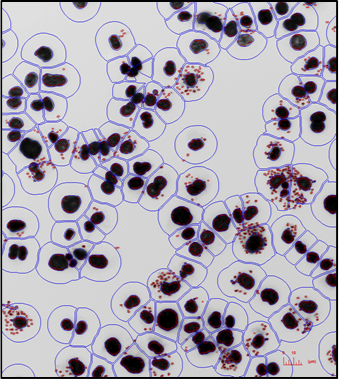
We have collaborated with investigators from the Center for Discovery and Innovation in Parasitic Diseases(CDIPD) to develop high-throughput screens for parasites as diverse as the single-celled parasites Trypanosoma cruzi, Leishmania, T. brucei, Entamoeba histolytica, Giardia lamblia, and Cryptosporidium, to large parasitic worms Brugia and Schistosoma. In each case, existing drugs were found to be active in killing parasites while sparing the host. For example, in collaboration with the McKerrow Lab (UCSF) and Reed Lab (UCSD), we helped repurpose Auranofin, a rheumatoid arthritis drug from the 1950s, for the treatment of E. histolytica, the causative agent of amebiasis and amebic dysentery. The compound received FDA orphan drug status and has entered clinical trials for amebiasis and giardia (A high-throughput drug screen for Entamoeba histolytica identifies a new lead and target, Debnath, et al, 2012, Nature Medicine 18:956-960).

For NTD screens and chemical optimization, see also:
- A multi-dimensional, time-lapse, high content screening platform applied to schistosomiasis drug discovery, (Chen, et al, Commun Biol 2020, 3, 747)
- A screen against Leishmania intracellular amastigotes: comparison to a promastigote screen and identification of a host cell-specific hit. (De Muylder, et al, PLoS NTD 2011, 5:e1253)
- Tetrafluorophenoxymethyl ketone cruzain inhibitors with improved pharmacokinetic properties as therapeutic leads for Chagas’ disease. (Neitz, et al, Bioorg Med Chem Lett 2015, 25:4834-7)
- Quantification and clustering of phenotypic screening data using time-series analysis for chemotherapy of schistosomiasis. (Lee, et al, BMC Genomics 2012, 13:S4)
- Mining a cathepsin inhibitor library for new antiparasitic drug leads. (Ang, et al, PLoS NTD 2011, 5:e1023)
- Novel non-peptidic vinylsulfones targeting the S2 and S3 subsites of parasite cysteine proteases. (Bryant, et al, Bioorg Med Chem Lett 2009, 19:6218-21)
- An image-based assay for high throughput screening of Giardia lamblia. (Gut, et al, J Microb Meth 2011, 83:398-405)
- Lead identification to clinical candidate selection: drugs for Chagas disease. (Neitz, et al, J Biomol Screening 2015, 20:101-111)
High-content imaging
Imaging-based screens for ciliogenesis and hedgehog signaling
Vertebrate Hedgehog (Hh) signals involved in development and some forms of cancer, such as basal cell carcinoma, are transduced by the primary cilium, a microtubule projection found on many cells. A critical step in vertebrate Hh signal transduction is the regulated movement of Smoothened (Smo), a seven-transmembrane protein, to the primary cilium. The Reiter Laband the SMDC are working to identify small molecules that interfere with either the ciliary localization of Smo or ciliogenesis. Using high-throughput, microscopy-based screen for compounds that alter the ciliary localization of YFP-tagged Smo, we have identified several compounds that inhibit Hh pathway activity, either by binding directly to Smo or by blocking ciliogenesis. (Small molecule inhibitors of Smoothened ciliary localization and ciliogenesis, Wu, et al, Proc Natl Acad Sci, USA, 2012, 109; 13644-13649)

High-content imaging of three-dimensional cultures
Glioblastoma(GBM) is a highly resistant brain cancer in both children and adults. Notable Labs aims to use patient-derived materials to better identify effective anticancer agents. Together, we developed an assay using neurospheres derived from GBM cell lines and surgical isolates. Bright-field microscopyand image analysis were used to measure the change in size of the tumor following treatment with compounds from the SMDC drug collection and other agents reported to kill glioblastoma cells.

Screening of whole organisms
Drug discovery in model organisms such as zebrafishis a promising approach for identifying biologically relevant lead compounds. As a new approach for Parkinson’s disease, Guo Lab has developed a model for dopaminergic (DA) neuron development in which nitroreductase (NTR) and an mCherry marker are selectively expressed in DA neurons. When zebrafish larvae are treated with the prodrug metronidazole (Mtz), the NTR within the neuron converts Mtz into a cytotoxin, causing cell type-specific ablation. If zebrafish brains can be visualized and measured in high-throughput, one could screen for compounds that protect DA neurons from degeneration or stimulate their regeneration. High-content imaging of zebrafish at cellular resolution is challenging, however, due to the difficulty in orienting larvae en masse such that the cell type of interest is in clear view. Working in collaboration, Guo Lab, Huang Lab, and SMDC discovered that using a liquid handler to quickly aspirate and replace 40uL of liquid in each well caused the anesthetized embryo in the wells to tumble and assume a new pose. Therefore, we were able to increase the chance of acquiring an image of a correctly posed larva by repeatedly re-posing and imaging the larvae. Overall, five cycles of imaging and re-posing took a total of 75 minutes per plate, allowing > 1,800 fish larvae to be analyzed per day. (A High-Content Larval Zebrafish Brain Imaging Method for Small Molecule Drug Discovery, Liu et al. PLoS One. 2016, 11(10):e0164645)
Tethering
New ways of targeting Ras
In collaboration with the SMDC, UCSF investigators Kevan Shokatand Frank McCormickhave produced exciting new avenues for inhibiting Rasand have figured significantly in a resurgent interest in this oncogene, long considered undruggable. Screening the oncogenic mutation G12C, the Shokat Labdiscovered disulfide hits that were then converted to irreversible electrophilic lead compounds. Lead compounds were shown by X-ray crystallography to bind in an allosteric pocket beneath switch II and covalently engage Cys12. Related compounds are being developed in the drug candidates by Wellspring Biosciences. The McCormick Labperformed a tethering screen to identify compounds that label the C-terminal CAAX box cysteine in Ras, the site of protein prenylation. Selected disulfide hits that showed selectivity for the CAAX cysteine were then converted into electrophilic lead compounds for cellular and in vivo studies. Specific lead compounds have demonstrated Ras-dependent growth arrest cells and are being further developed by the Renslo Lab in collaboration with TheRas, Inc. (K-Ras(G12C) inhibitors allosterically control GTP affinity and effector interactions, Ostrem, et al, Nature, 2013, 503, 548-51)
See also:
- Fluorescence Anisotropy-Based Tethering for Discovery of Protein-Protein Interaction Stabilizers
- Site-Directed Fragment-Based Screening for the Discovery of Protein-Protein Interaction Stabilizers
- Allosteric inhibitors and activators of PDK1
- Inhibitors of h-LRH-1
- Ordering a dynamic protein domain using a tethered stabilizer
- Cysteine mutations in cancer