TRANSPERS News: Phillips Speaks at US Congressional Seminar, New Publications, and Participation in Scholarly Meetings
Letter from the Center Director
Dear Colleagues,

Summer greetings! In this newsletter, we share news of our involvement in a US Congressional seminar on implementing innovations to improve health, as well as in scholarly meetings on health services research and precision medicine. We also highlight new research on whether payers cover follow-up evaluations after patients receive tests that they do not cover and on the use of ctDNA testing to improve outcomes in advanced lung cancer.
We welcome your thoughts and perspectives at [email protected].
Best,
Kathryn
Dissemination
TRANSPERS Director Advises Congress on Turning Investments and Innovations into Improved Health
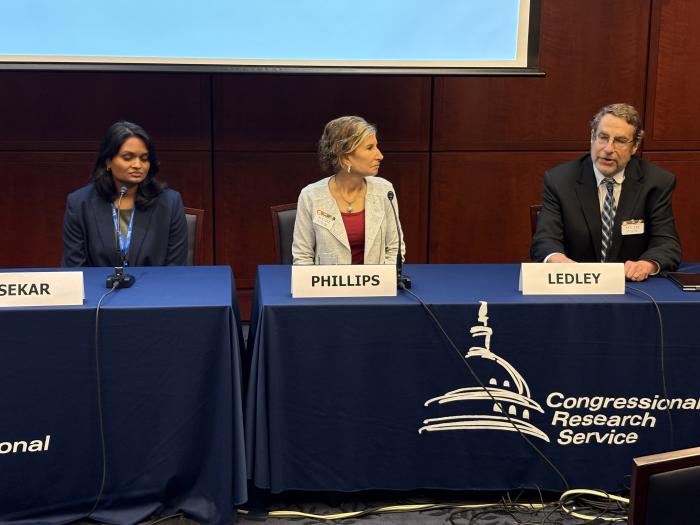
Kathryn Phillips was invited to speak at a US Congressional seminar sponsored by the Congressional Research Service, which advises Members of Congress and their staff. She was one of four speakers at a closed-door seminar on the topic of successful implementation of innovations to improve patient outcomes and population health, held at the US Capitol on July 21. Her recommendations included supporting implementation science and strengthening connections across agencies, developing interconnected and standardized pathways to implementation across the entire innovation and implementation pipeline, evaluating the full clinical and policy pathways to improved outcomes, incorporating perspectives across stakeholders, and aligning reimbursement with value.
Publications
New Study Explores Payer Coverage for Follow-up Evaluations after Multi-Cancer Early Detection Testing
A new study led by TRANSPERS collaborator Julia Trosman, published in the Journal of the National Comprehensive Cancer Network (JNCCN), highlights a paradox in health policy: who pays for evaluations following tests that insurers do not currently cover?
In interviews with 16 major US private payers, the researchers found that although none currently cover multi-cancer early detection testing (MCED), most (63%) indicated they would cover at least some follow-up diagnostic testing—such as imaging or biopsy—but often on a case-by-case basis and only under specific clinical circumstances. No payer reported having a formal policy for post-MCED confirmatory testing, creating uncertainty for patients, clinicians, and health systems.
The study underscores the need for clearer coverage policies and greater attention to patient cost-sharing as new tests emerge that are not covered by payers but which will require follow-up evaluations.
TRANSPERS Researchers Argue That Without the Right Tests, the Best Medicines Make No Difference
Our paper published in Science in April continues to attract attention with 1,200 downloads and an Altmetric score of 55. In collaboration with former FDA Commissioner Rob Califf, TRANSPERS authors Kathryn Phillips and Danea Horn argue that diagnostic tests receive lower investment, insurance coverage, and payment rates—and are also less likely to receive expedited FDA review—than drugs, resulting in limited access to essential diagnostics needed for effective and targeted care. The authors propose policy reforms specific to diagnostics, including joint regulatory, coverage, and value assessments of diagnostics alongside associated therapeutics; incentives for clinical utility evidence generation; coordinated and standardized regulatory and payment pathways; value-based payment models that assess combined clinical and economic value of diagnostic-guided therapy; and global harmonization of regulatory requirements. This work builds on a National Academies of Sciences, Engineering, and Medicine (NASEM) report for which Phillips contributed, Strategies to Better Align Investments in Innovations for Therapeutic Development with Disease Burden and Unmet Needs.
TRANSPERS Study Examines Whether Earlier ctDNA Testing Improves Outcomes in Advanced Lung Cancer
A simulation study by Jeroen Jansen, Michael Douglas, and Kathryn Phillips suggests that using circulating tumor DNA (ctDNA) to identify patients who are not responding to treatment—and switching them to a new therapy earlier than current practice—could modestly improve survival for patients with advanced non-small cell lung cancer (NSCLC).
The model estimated survival gains of 2 to 7 weeks, with ctDNA-guided care appearing cost-effective under commonly used US thresholds, although considerable uncertainty remains. Because the analysis is based on simulation modeling rather than prospective clinical trial data, the authors emphasize that prospective clinical trials are needed to determine whether earlier ctDNA-guided treatment decisions improve outcomes in real-world practice.
Conferences
TRANSPERS Researcher Emily Mrig Presents at the University of Pennsylvania, ELSI Congress, and ASPO
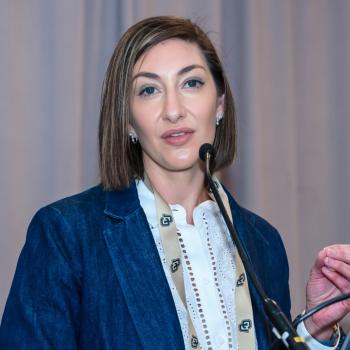
One of only two 2026 UCSF Emerging Scholars awardees, Emily presented her research, “From Promise to Practice: How Payment, Coverage, and Institutional Dynamics Shape Access to Precision Medicine,” at the University of Pennsylvania on April 23 as part of the Emerging Scholars Exchange Program.
She also presented, “Beyond Coverage: How Healthcare System and Clinic-Level Factors Shape Access to Genomic Medicine,” at the 7th ELSI Congress hosted at the University of North Carolina, Chapel Hill on June 22, and "Cascading Payment Barriers Across the Precision Oncology Continuum: From Treatment to Prevention and Implications for Multi-Cancer Detection Tests," at the 50th Annual Meeting of the American Society of Preventive Oncology in Denver, Colorado on April 14.
Kathryn Phillips Moderates Plenary on 60 Years of Medicaid
Kathryn moderated the plenary session, “What a Difference 60 Years Makes! Medicaid Turns 60,” at the Association of University Programs in Health Administration annual meeting in June.

TRANSPERS Participates in UCSF Conference on Health Services Research
On May 13, Kathryn moderated the keynote session with Dr. Jim Wood, former California Assembly Speaker Pro Tempore at the 2026 UCSF Health Services Research Symposium. Emily Mrig also presented a poster at the symposium titled, “Beyond Coverage: How Institutional Factors Shape Access to Precision Medicine.”